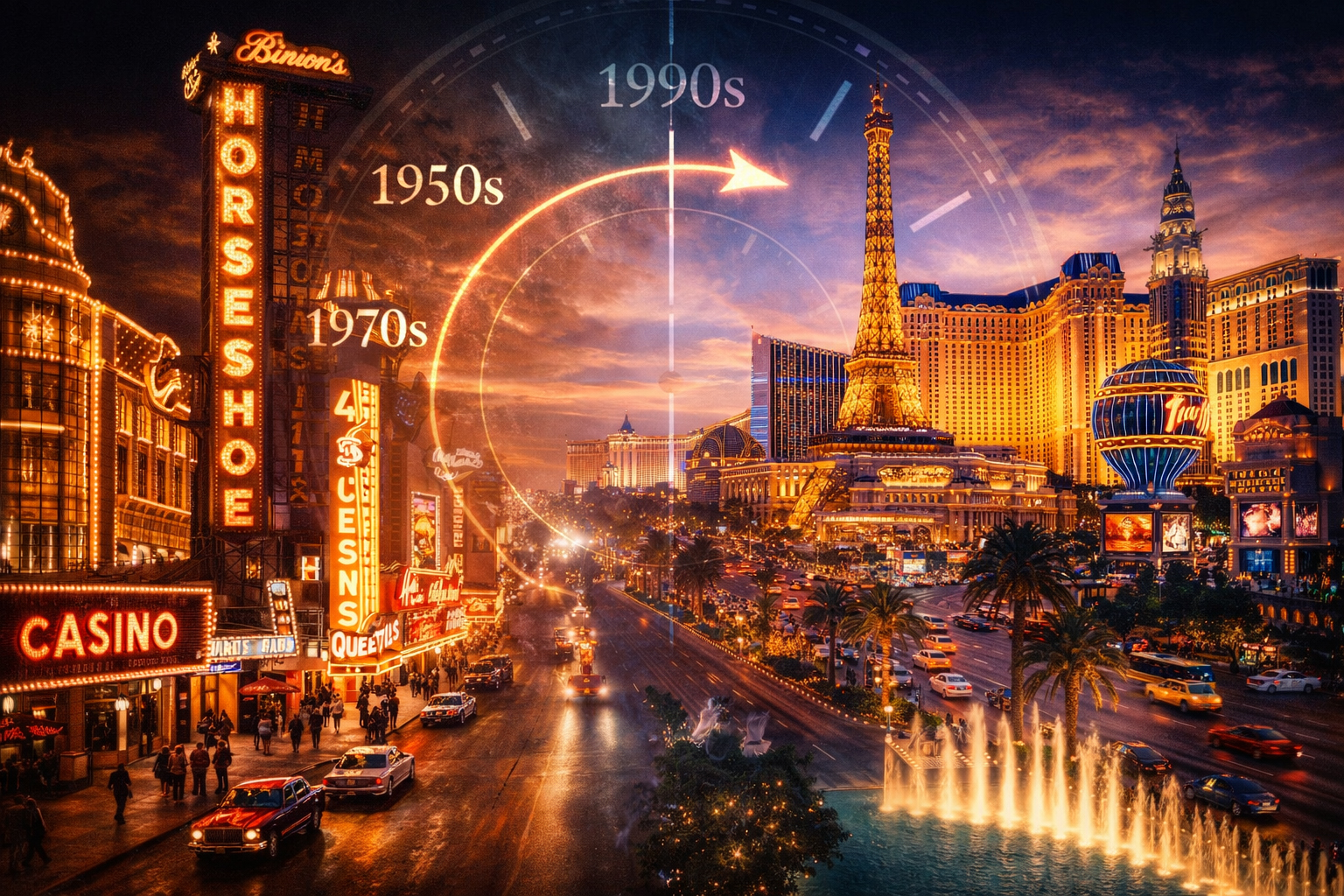
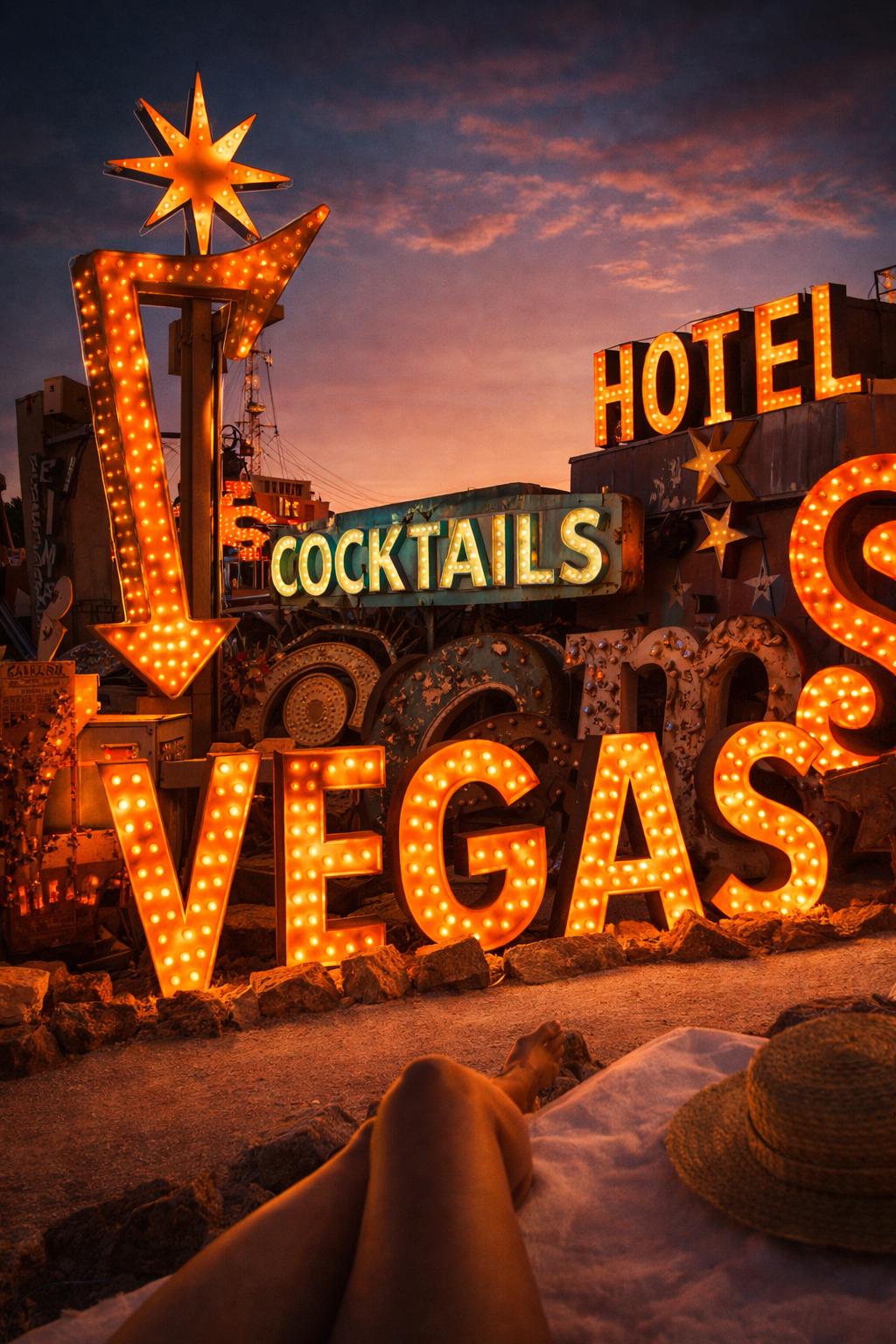
Fremont は街の記憶を濃く持ち、
Strip は街の欲望を大きく見せた。
Las Vegas は、その二つの重心でできている。
Downtown と Strip を比べるとき、 つい片方を “本物”、片方を “後からできた観光地” のように言いたくなります。 けれど、それも少し雑です。 Fremont はたしかに古い。 しかし Strip も単なる imitation ではなく、別の都市機能を発明した。 だからこの歴史は、勝ち負けの話ではなく、 **一つの都市が二つの空間言語を持つようになった話** として読むべきです。 :contentReference[oaicite:6]{index=6}
Fremont は compact で、近く、街路が前に出る。 Strip は長く、遠く、建物と sign が道路に向かって巨大な front を作る。 その違いが、Las Vegas の都市史を決めました。
第一段階。Fremont は “街そのもの” に近い場所だった
Neon Museum の 2025年記事は、Fremont Street が 1905年に開き、 Las Vegas’ first paved street だったと説明しています。 さらに late 1920s から neon が入り、“Glitter Gulch” の印象を持つようになったと述べています。 :contentReference[oaicite:7]{index=7}
近い街だった
Fremont の魅力は、人と建物と道路の距離が近いことにある。 街路が先にあり、casino はそこへ面していた。 :contentReference[oaicite:8]{index=8}
downtown の心臓だった
現在の Visit Las Vegas も Downtown を “creative and historic district” として位置づけています。 :contentReference[oaicite:9]{index=9}
neon の街路言語が育った
Fremont は neon が密に重なり、歩く人間の視線に近い位置で街を読ませた。 :contentReference[oaicite:10]{index=10}
つまり Fremont は、都市の core street に casino culture が付着した場所です。 先に street があり、その上に Las Vegas 的な夜が乗っていった。
第二段階。Strip は “街路” ではなく “corridor of destinations” として始まった
City の official timeline は、 1940年代に El Rancho Vegas、Last Frontier、Flamingo、Thunderbird が “what would become The Strip” に並び始めたと書いています。 ここで大事なのは、Strip が Fremont の延長ではないことです。 Strip は最初から **resort corridor** 的に育った。 つまり、街の続きというより、道路に沿って destination が並ぶ形式です。 :contentReference[oaicite:11]{index=11}
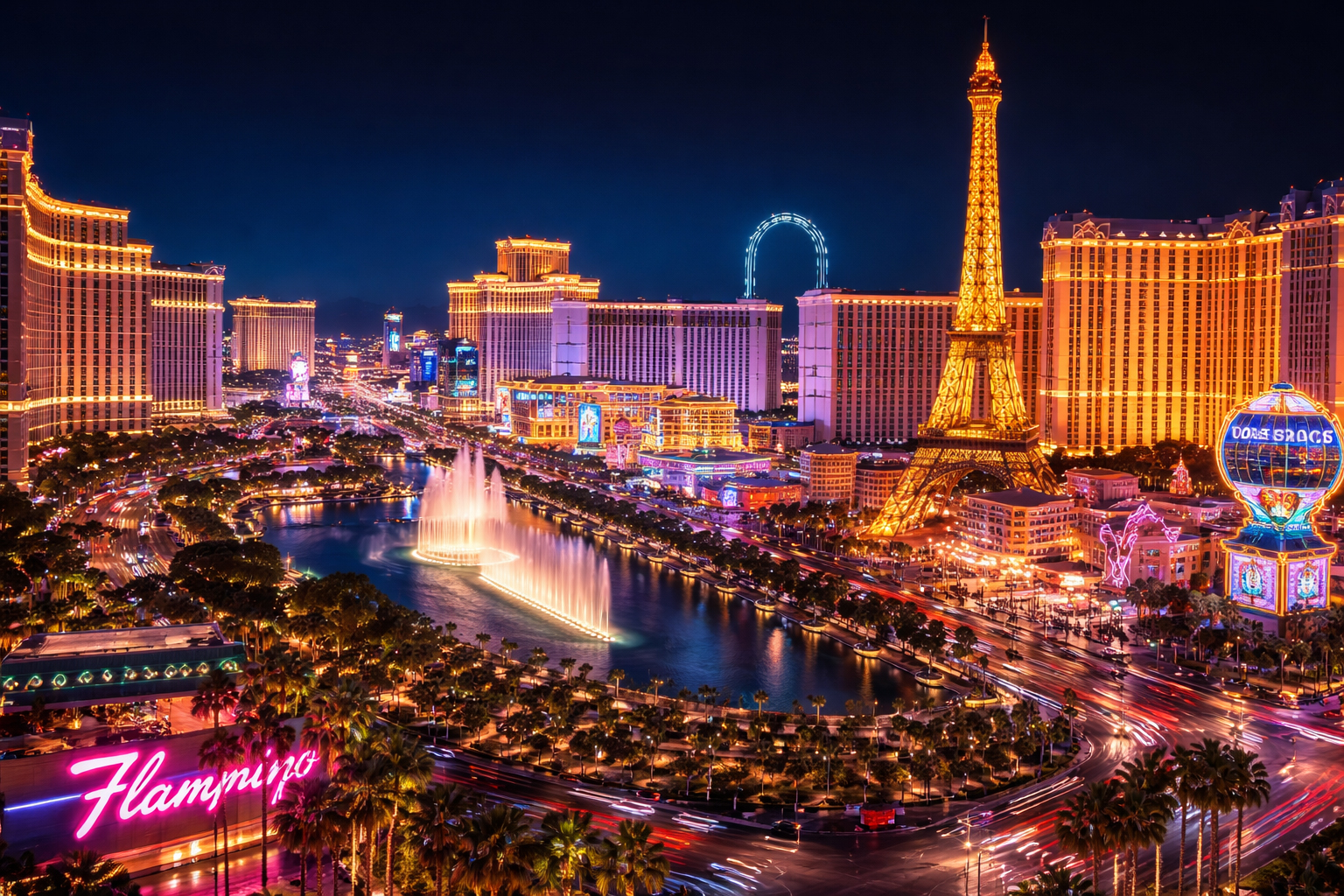
第三段階。重心移動は “Downtown が死んだ” ことを意味しなかった
Fremont から Strip へ、と言うと、 つい Downtown が置き換えられたように見えます。 しかし Neon Museum の history tour が Downtown と the Strip の両方を city evolution の柱として語るのは、 その理解が不十分だからです。 :contentReference[oaicite:14]{index=14}
実際には、Downtown は historic core, local memory, dense neon identity を残し、 Strip は scale, resorts, shows, megaresorts, and convention-friendly visibility を引き受けた。 つまり “交代” というより “分業” のほうが近いのです。
Fremont / Downtown の役割
歴史、密度、街路感覚、近さ、古い Vegas の記憶、コンパクトなネオン。 “心臓” に近い。 :contentReference[oaicite:15]{index=15}
Strip の役割
resort scale、show city、megaresort、long visual corridor、destination branding。 “顔” に近い。 :contentReference[oaicite:16]{index=16}
第四段階。Fremont は “人のスケール”、Strip は “車と遠景のスケール” を引き受けた
これは都市の読み方としてかなり重要です。 Fremont は歩く人間の視点で見やすい。 signage も密で、建物との距離も近い。 それに対して Strip は、長く、離れ、徒歩より mobility を強く意識させる。 Visit Las Vegas の “Getting Around” guide が、 Strip の端から端は walking で簡単ではないと案内しているのは、今もその構造が生きているからです。 :contentReference[oaicite:17]{index=17}
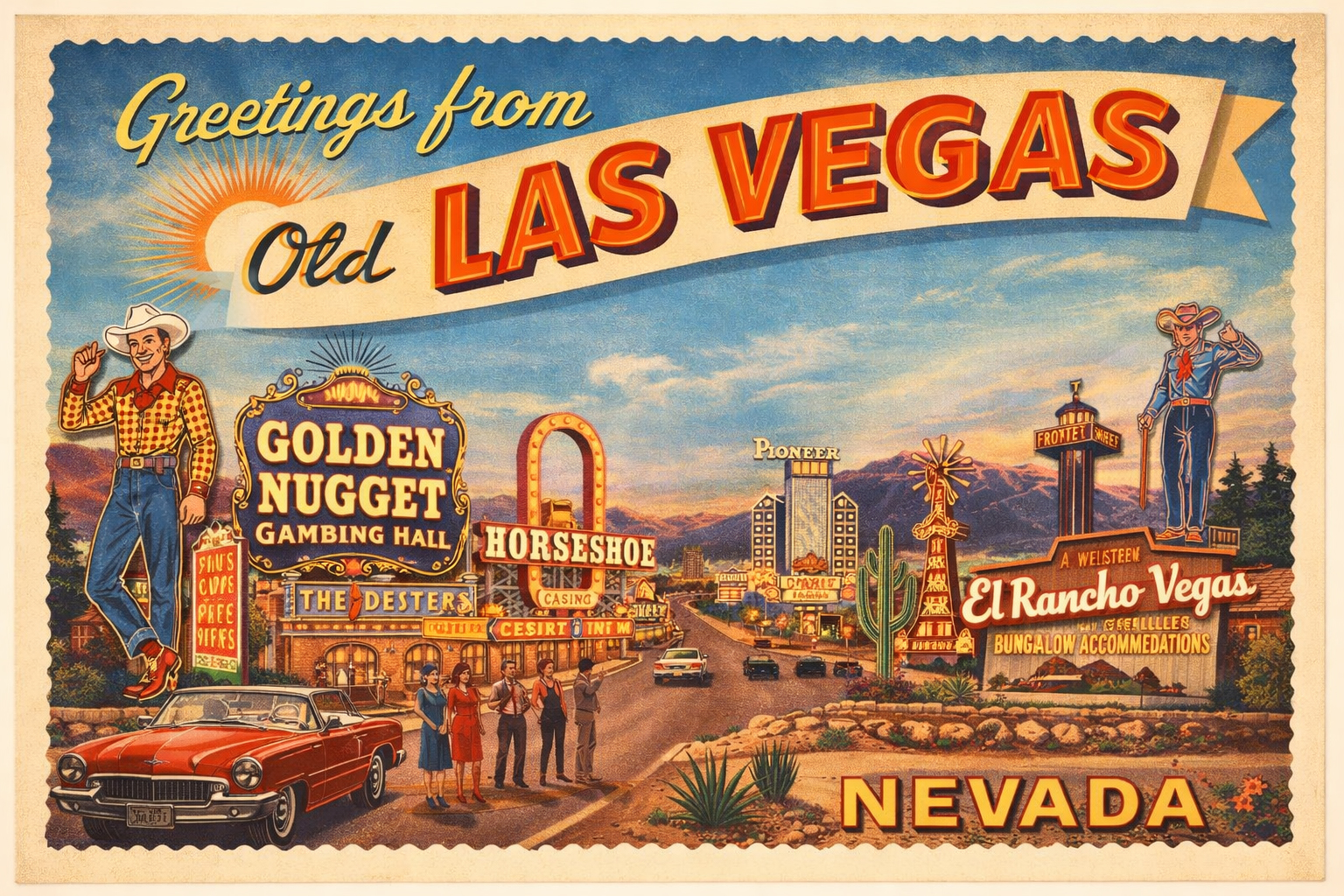
第五段階。今の Las Vegas は “Downtown と Strip の二重中心” として理解したほうが正確
現在の Visit Las Vegas でも、 Fremont Street Experience は vibrant heart of Downtown として案内され、 Downtown 自体も historic district として強く売られています。 その一方で、全体の city image は依然として Strip の大規模 resort corridor に大きく依存している。 :contentReference[oaicite:19]{index=19}
だから今の Las Vegas は、 一つの center を持つ city としてより、 **historic core と spectacle corridor の二重構造を持つ city** として理解したほうがよい。 それが Fremont から Strip への歴史の最終形です。
Fremont の始まり
Fremont Street が開き、後に first paved street として Downtown の歴史的 spine になる。 :contentReference[oaicite:20]{index=20}
El Cortez と Downtown の厚み
City timeline は El Cortez を Fremont 側の節点として示し、Downtown casino history の継続を可視化しています。 :contentReference[oaicite:21]{index=21}
Strip corridor の形成
El Rancho Vegas, Last Frontier, Flamingo, Thunderbird などが “what would become The Strip” に並び始める。 :contentReference[oaicite:22]{index=22}
二重中心都市としての Las Vegas
Downtown は historic core として、Strip は world-famous resort corridor として、それぞれ別の役割を持ち続ける。 :contentReference[oaicite:23]{index=23}
では、Fremont から Strip への本当の変化とは何だったのか
一番正確に言えば、 それは **都市の重心が “街路” から “destination corridor” へ一部シフトしたこと** です。
Fremont は still Las Vegas の heart を主張できる。 しかし Strip は、Las Vegas の visible ambition, resort scale, and global tourism branding を引き受けた。 だからこれは replacement ではなく differentiation です。 そしてその differentiation こそが、Las Vegas を普通の downtown-centered American city とは違うものにしました。 :contentReference[oaicite:24]{index=24}
Fremont が持ち続けたもの
- historic core
- dense neon identity
- 歩く街のスケール
- Downtown の記憶
- “old Vegas” の文化的重み
Strip が引き受けたもの
- resort corridor
- visual scale と遠景性
- megaresort model
- show city / convention city の顔
- global tourist branding
本当に秘密っぽい結論。Fremont は “記憶の街路”、Strip は “欲望の大通り” になった
これが最後の核心です。 Fremont から Strip へ、という変化を地理だけで読むと少し薄い。 もっと都市詩的に、でも歴史的に正確に言うなら、 **Fremont は記憶を引き受け、Strip は欲望を引き受けた** のです。 :contentReference[oaicite:25]{index=25}
前者は近く、濃く、古い。 後者は長く、大きく、遠景に強い。 そして Las Vegas は、その両方を同時に持つことで、 一つの都市の中に二つの自己像を保ち続けています。
Fremont から Strip への歴史は、
中心が消えた話ではない。
一つの都市が、二つの顔を持つようになった話だ。
最終まとめ
- Fremont の意味: 1905年から続く historic core であり、歩いて読まれる Las Vegas の原型。 :contentReference[oaicite:26]{index=26}
- Strip の意味: 1940年代に形成された resort corridor であり、後の spectacle city の顔。 :contentReference[oaicite:27]{index=27}
- 本当の変化: “中心の移動” 以上に、都市機能と視覚言語の分化。 :contentReference[oaicite:28]{index=28}
- 現在の理解: Las Vegas は Downtown と Strip の二重中心で読むほうが正確。 :contentReference[oaicite:29]{index=29}
- このページの秘密: Fremont は記憶の街路、Strip は欲望の大通りとして、今も同じ都市の中に共存しています。 :contentReference[oaicite:30]{index=30}
だから次に Las Vegas を歩くときは、 Downtown と Strip を “古い / 新しい” だけで見ないでください。 どちらが何を引き受けているのか。 それを見ると、Las Vegas はただの観光地ではなく、 とても計算された二重中心都市に見えてきます。 :contentReference[oaicite:31]{index=31}
次は、show city や neon の線へつなげましょう。
Fremont と Strip の違いが見えたら、次はそこから生まれた show culture と visual language を読むのが自然です。